
Pledge Status
Active
Pledge Date
Friday, March 27, 2026
Program Year
2026
Links and Uploads
View Links and UploadsAction Item Report
Community Spotlight
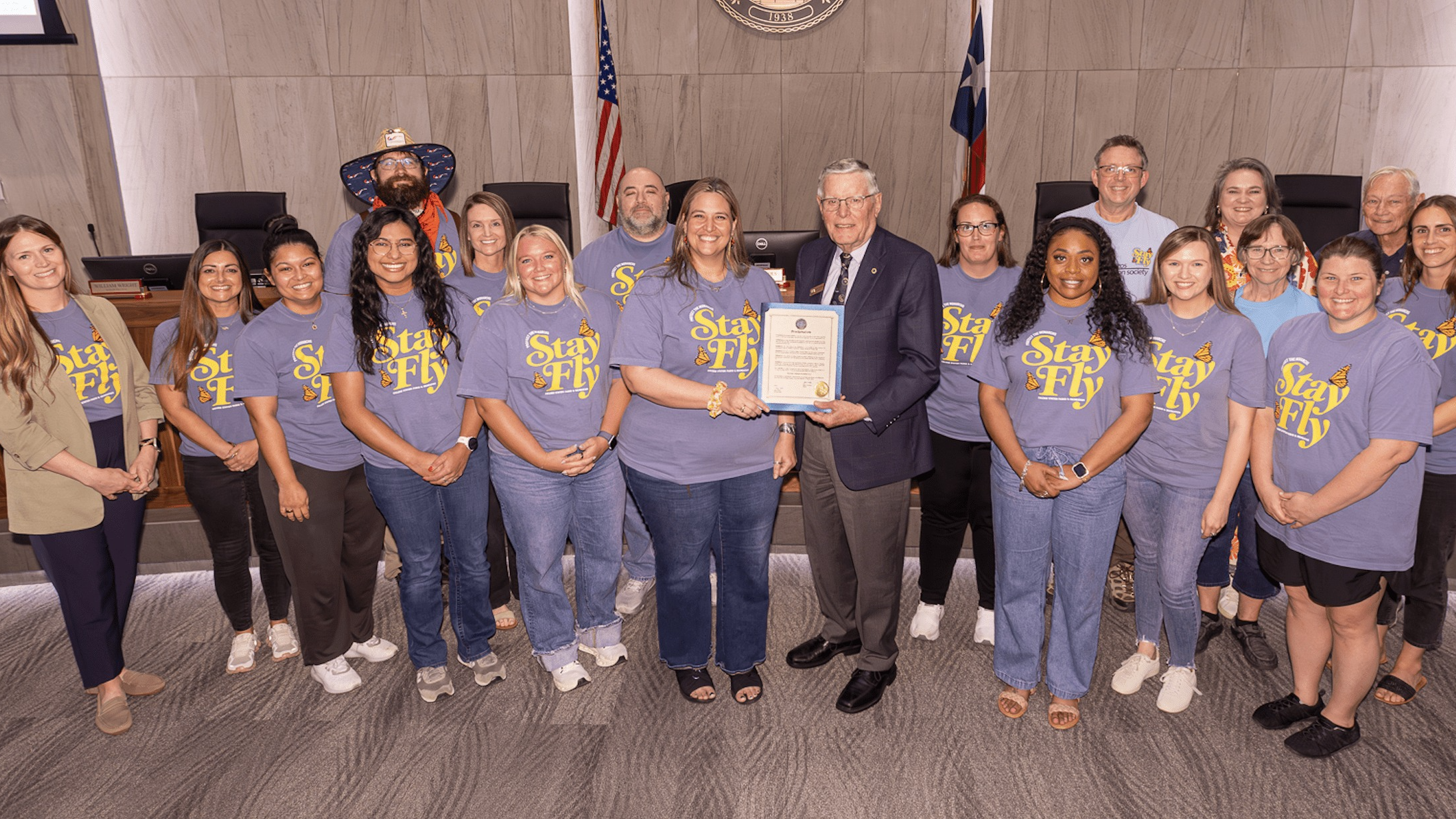
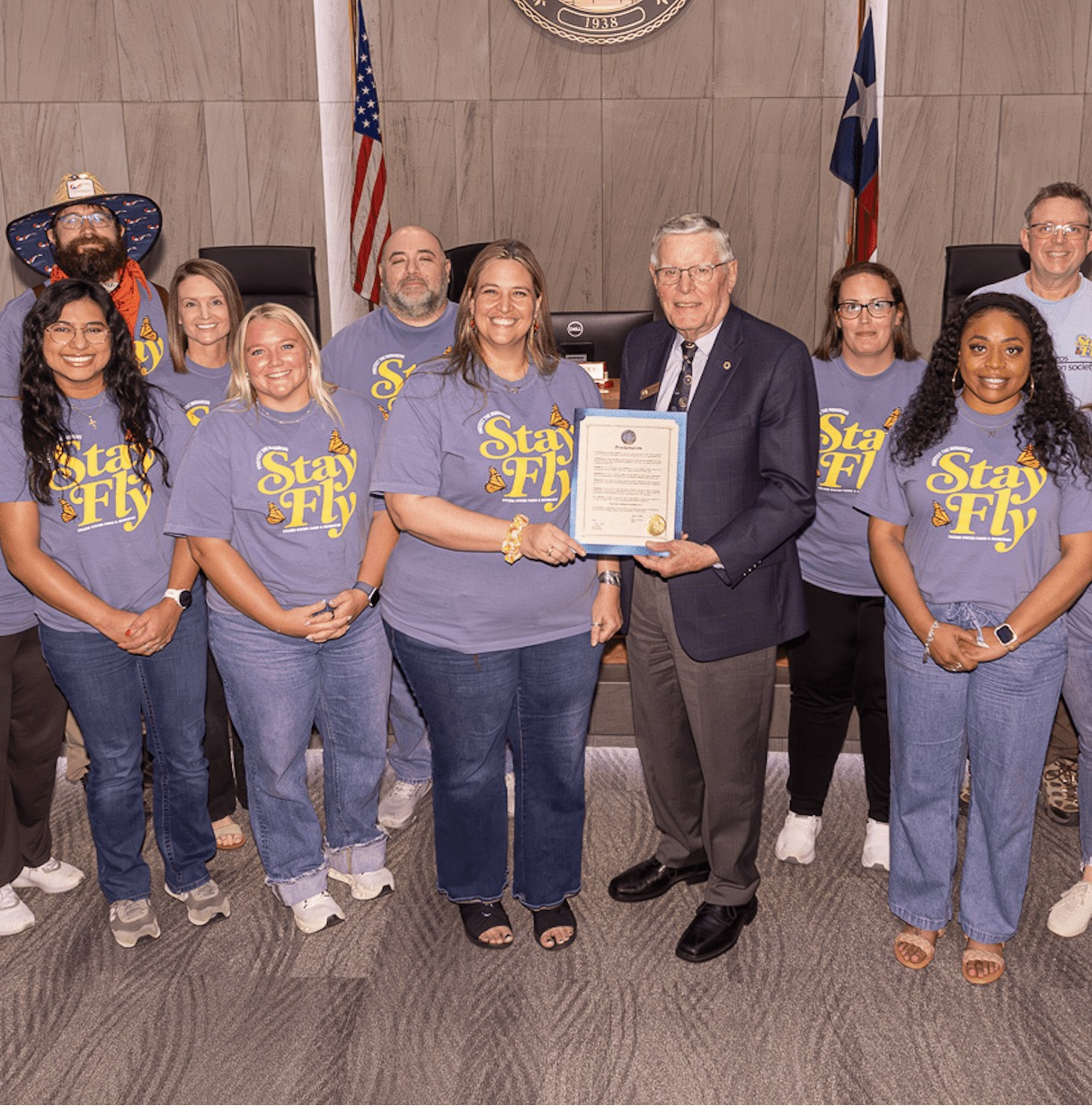
Mayor Monarch Pledge College Station March 26 2026
The City of College Station Parks and Recreation Team, The Conservation Advisory Group, Rio Brazos Audubon, Keep Brazos Beautiful, and Texas Master Naturalist stood beside Mayor John Nichols to celebrate the re-signing of the Mayor's Monarch Pledge.
Learn MoreAction Items Committed for 2026
- Issue a proclamation to raise awareness about the decline of the monarch butterfly and the species’ need for habitat. This proclamation must incorporate a focus on monarch conservation.
- Launch or maintain a public communication effort to encourage residents to plant monarch gardens at their homes or in their neighborhoods. (If you have community members who speak a language other than English, we encourage you to also communicate in that language; Champion Pledges must communicate in that language.)
- Engage with community garden groups and urge them to plant native milkweeds and nectar-producing plants.
- Engage with city parks and recreation, public works, sustainability, and other relevant staff to identify opportunities to revise and maintain mowing programs and milkweed / native nectar plant planting programs.
- Engage with gardening leaders and partners (e.g., Master Naturalists, Master Gardeners, Nature Centers, Native Plant Society Chapters , other long-standing and influential community leaders) to support monarch butterfly conservation.
- Engage with Homeowners Associations (HOAs), Community Associations or neighborhood organizations to identify opportunities to plant monarch gardens and revise maintenance and mowing programs.
- Engage with developers, planners, landscape architects, and other community leaders and organizers engaged in planning processes to identify opportunities to create monarch habitat.
- Create a community-driven educational conservation strategy, initiative, or practice that focuses on and benefits local, underserved residents.
- Host or support a native seed or plant sale, giveaway or swap.
- Facilitate or support a milkweed seed collection and propagation effort.
- Plant or maintain a monarch and pollinator-friendly demonstration garden at City Hall or another prominent or culturally significant community location.
- Plant milkweed and pollinator-friendly native nectar plants along roadsides, medians, or public rights-of-way.
- Launch or maintain an outdoor education program(s) (e.g., at schools, after-school programs, community centers and groups) that builds awareness and creates habitat by engaging students, educators, and the community in planting native milkweed and pollinator-friendly native nectar plants (i.e., National Wildlife Federation’s Schoolyard Habitats program and Monarch Mission curriculum).
- Earn or maintain recognition for being a wildlife-friendly city by participating in other wildlife and habitat conservation efforts (i.e., National Wildlife Federation’s Community Wildlife Habitat program).
- Initiate or support community science (or citizen science) efforts that help monitor monarch migration and health.
- Add or maintain native milkweed and nectar-producing plants in gardens in the community.
- Launch, expand, or continue an invasive species removal program that will support the re-establishment of native habitat for monarch butterflies and other pollinators.
- Host or support a monarch butterfly festival that is accessible to all residents in the community and promotes monarch and pollinator conservation, as well as cultural awareness and recognition.
- Display educational signage at monarch gardens and pollinator habitat.
- Remove milkweed from the list of noxious plants in city weed / landscaping ordinances (if applicable).
- Change weed or mowing ordinances to allow for native prairie and plant habitats.
- Increase the percentage of native plants, shrubs and trees that must be used in city landscaping ordinances and encourage use of milkweed, where appropriate.
- Integrate monarch butterfly conservation into the city’s Park Master Plan, Sustainability Plan, Climate Resiliency Plan or other city plans.
- Reduce or eliminate the use of herbicides, pesticides, or other chemicals that are harmful to monarchs and pollinators and urban wildlife.
- Launch, expand, or continue one or more ordinances to reduce light pollution to benefit urban wildlife.
Past Pledge Archive
| Mayor Name | Program Year | Pledge Date | Achievement | |
|---|---|---|---|---|
| Mayor John Nichols | 2026 | 3/27/2026 | View Pledge |


